Skrill Gambling Block and GAMSTOP: What Each Does in the UK
 Available in US
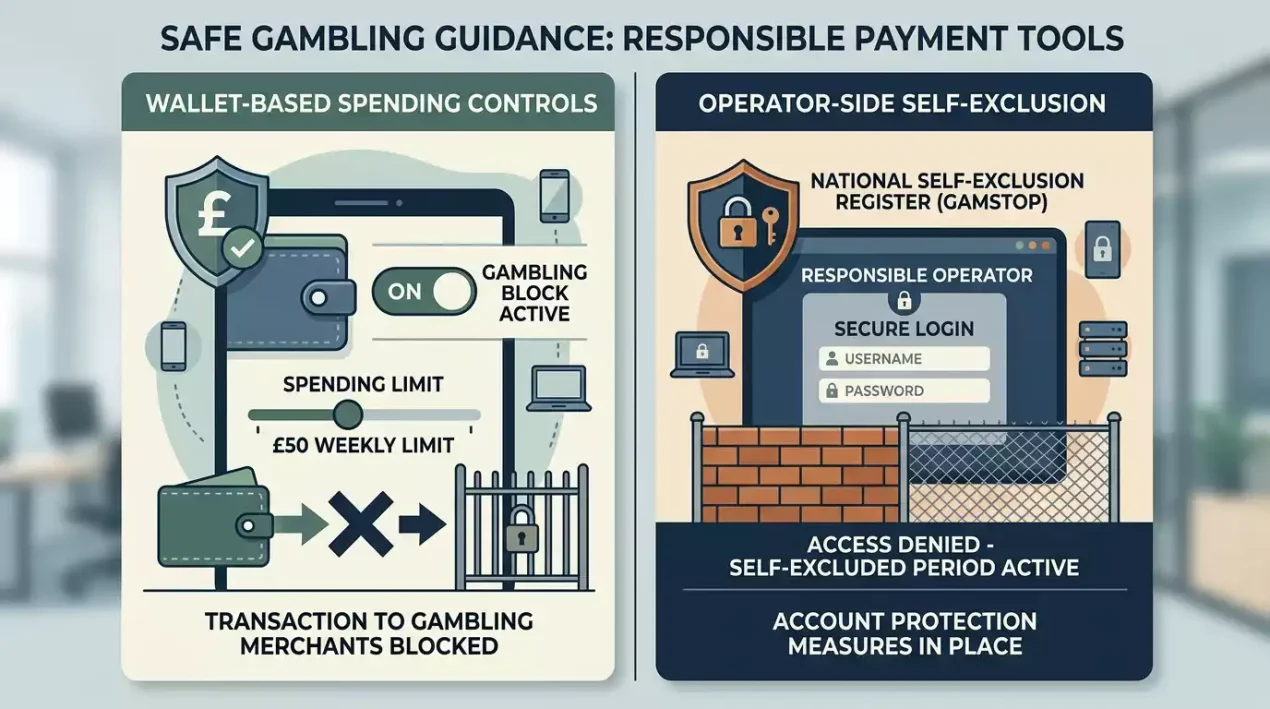
Skrill’s gambling block is a payment-control feature for certain gambling-category transactions through Skrill. GAMSTOP is a national online self-exclusion scheme used by Great Britain-licensed online gambling operators. They are different tools. A Skrill gambling block does not replace GAMSTOP, and GAMSTOP does not work as a Skrill wallet block.
Use them for different parts of the risk. Skrill can help limit one payment route. GAMSTOP helps stop access to participating licensed gambling websites, apps and services. A casino’s own self-exclusion, time-out, deposit-limit and account-review tools remain separate. Anyone trying to reduce gambling access should think in layers rather than looking for one switch that solves every route.
Skrill gambling block versus GAMSTOP
The comparison below is intentionally practical. It avoids promotional language because this page is about reducing access and understanding controls, not finding a casino or offer.
| Control | Main role | What it can help with | What not to assume |
|---|---|---|---|
| Skrill gambling block | Wallet-level spending control for certain gambling-category transactions. | Reducing the use of Skrill as a gambling payment route. | It is not casino self-exclusion and may not cover every possible gambling route. |
| GAMSTOP | Online self-exclusion for Great Britain-licensed participating gambling operators. | Preventing access to licensed online gambling websites, apps and services covered by the scheme. | It is not a wallet control and does not close a Skrill account. |
| Casino account tools | Operator-level limits, time-outs, self-exclusion and customer-interaction controls. | Managing or stopping access at the specific gambling account. | They do not automatically change Skrill settings. |
What Skrill’s gambling block is
Skrill support describes the gambling block as an optional feature that can be applied to an account. Once activated, Skrill says transactions categorised under a gambling merchant category code are declined before they go through. The useful phrase is payment control. The feature acts at the Skrill wallet layer, not at the gambling-operator layer.
This makes it different from a casino self-exclusion request. A wallet control can reduce the chance that a particular payment account is used for gambling. It does not decide whether a gambling website should let a person log in, send marketing, verify identity, settle bets or close a casino account. Those are operator-side questions.
What GAMSTOP is
GAMSTOP’s current terms describe it as a free self-exclusion service intended to help people avoid online gambling. They also state that gambling operators licensed to offer online and remote gambling services to individuals in Great Britain must be part of GAMSTOP as a condition of their Gambling Commission licence.
That scope is important. GAMSTOP helps with participating licensed operators and their online services. It is not designed to be a banking product, wallet setting or payment-method switch. It also should not be described as identical across every UK legal context without care, because Great Britain operator licensing and Northern Ireland gambling-law details are not always the same.
Why one control does not replace the other
A person could activate a Skrill gambling block and still need GAMSTOP or operator self-exclusion because other payment routes, accounts or gambling services may exist. A person could register with GAMSTOP and still choose to reduce payment access through Skrill because payment habits and account access are different parts of the same risk picture.
It is better to treat the controls as layers. Start with operator self-exclusion and GAMSTOP if the goal is to stop online gambling access at licensed operators. Add payment controls such as the Skrill gambling block to reduce a specific payment route. Review casino account limits and marketing preferences where the account remains open. The more routes involved, the more important it is not to rely on a single tool.
Merchant-category-code limits
Skrill’s wording depends on gambling merchant category coding. That is useful because it gives the wallet a way to identify gambling-category transactions before they complete. It also creates a limitation. A payment-control feature is only as strong as the route, category and transaction type it can recognise and block. Users should not treat it as a guarantee that every possible route to gambling spending is covered.
This is why the page avoids language such as “full protection” or “complete ban”. The safe wording is narrower: the Skrill gambling block can help limit Skrill payments to gambling merchants where the transaction falls within the feature’s scope. Anything broader would overstate what a payment account can do.
How operator checks and account limits fit in
Great Britain-licensed operators have their own safer-gambling and customer-interaction duties. Current Gambling Commission material on customer interaction is organised around identifying risk, taking action and evaluating outcomes. Separate remote technical standards require clearer financial-limit tools, including prompts to set limits and easier access to account-level limit settings.
These tools are not Skrill features. They sit on the gambling account. A casino may ask a customer to set a financial limit, review account information, complete checks or use time-out and self-exclusion tools. Skrill’s gambling block can complement those controls, but it cannot make decisions on behalf of the gambling operator.
Where KYC and withdrawals interact with controls
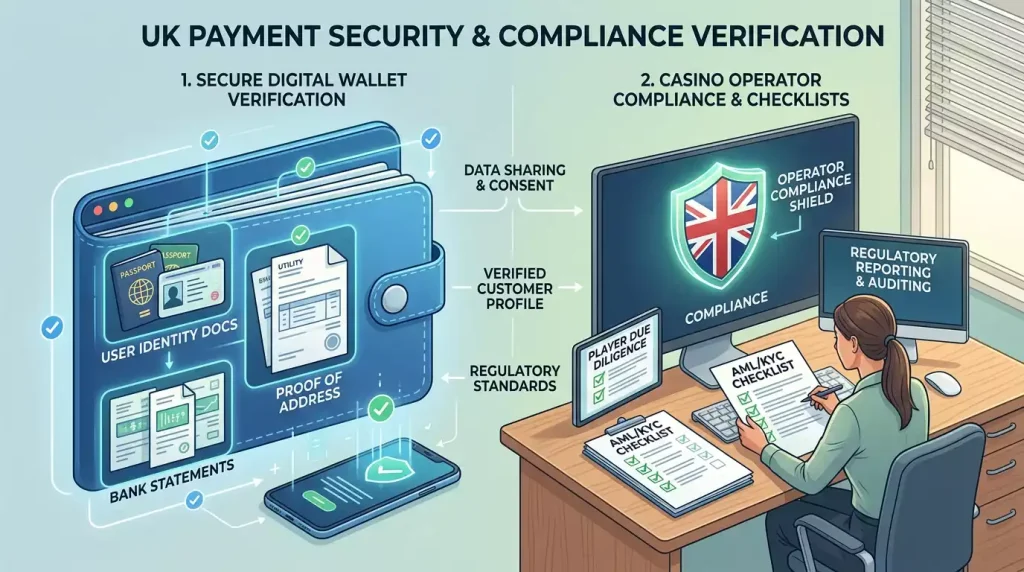
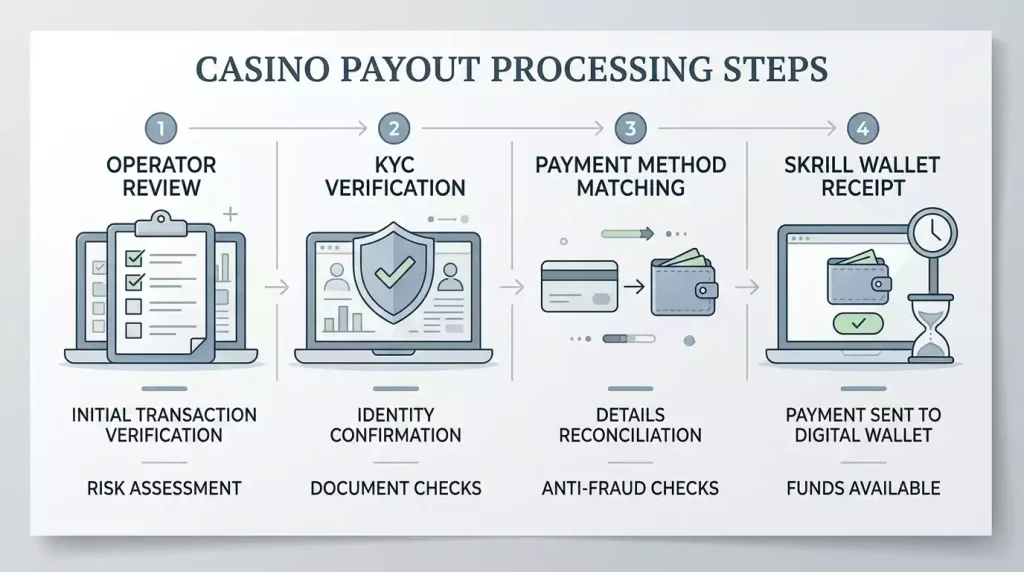
Controls do not remove verification. Skrill can have its own account checks, and a casino can still apply KYC, payment-ownership, customer-risk or withdrawal reviews. If an account is being closed or restricted after self-exclusion, the operator may still need to handle balances, identity checks and payment routing correctly.
For that reason, users should keep account details accurate and avoid third-party payment routes even when the main goal is to reduce access. Mismatched wallet, bank or casino details can make a difficult situation harder. The useful mindset is clean closure and controlled access, not workarounds.
Bonus pages should not distract from safety
A safer-gambling control page should not push offers. Skrill loyalty programmes, casino bonuses and promotion terms are separate topics from payment blocking and self-exclusion. If a casino promotion encourages a user to disable a block, ignore a self-exclusion, chase losses or bypass payment restrictions, that is a red flag rather than an opportunity.
UK safer-gambling policy has also moved further toward system-level harm prevention, including a statutory levy from April 2025 to fund research, prevention and treatment of gambling harms. That wider context reinforces the page’s practical point: payment controls and self-exclusion are protection tools, not acquisition or bonus tools.
Layered action plan
- Use GAMSTOP if the goal is online self-exclusion from Great Britain-licensed participating operators.
- Contact individual casino operators for account closure, time-out or self-exclusion where needed.
- Activate Skrill’s gambling block if you want to reduce gambling payments through Skrill.
- Review other payment accounts and cards rather than assuming Skrill is the only route.
- Turn off gambling marketing preferences where the operator provides account controls.
- Keep records of dates, account names and support replies when controls are activated.
- Seek appropriate support if gambling feels difficult to control.
Common wrong assumptions
“Skrill block means I am on GAMSTOP”
No. Skrill’s feature is a wallet control. GAMSTOP is an operator self-exclusion scheme for participating licensed online gambling operators.
“GAMSTOP closes my Skrill wallet”
No. GAMSTOP is not a Skrill account setting. Wallet access and gambling-operator access are separate layers.
“A block means no verification is needed”
No. Wallet checks, casino KYC and payment-ownership reviews can still be needed when money is moved, returned or withdrawn.
Bottom line
Skrill’s gambling block and GAMSTOP are useful only when their scope is understood. Skrill can help limit a payment route. GAMSTOP can help restrict access to participating licensed online operators in Great Britain. Casino account tools handle the operator relationship. None of these should be used as a workaround, a bonus trigger or a promise of complete coverage. For someone trying to reduce gambling access, the safer approach is layered controls, clean account details and no promotional distractions.
This material was created by the Skrill UK Guide team.
Prioritise safe gambling habits and resources with our main website.
Complete your registration smoothly by preparing your documents for KYC document and verification requirements.
Related posts
Skrill KYC and Casino Verification UK
Skrill Casino Withdrawals UK: Speed, KYC and Payout Caveats